10. The American Revolution Started Because American Settlers Illegally Moved Onto Native Land
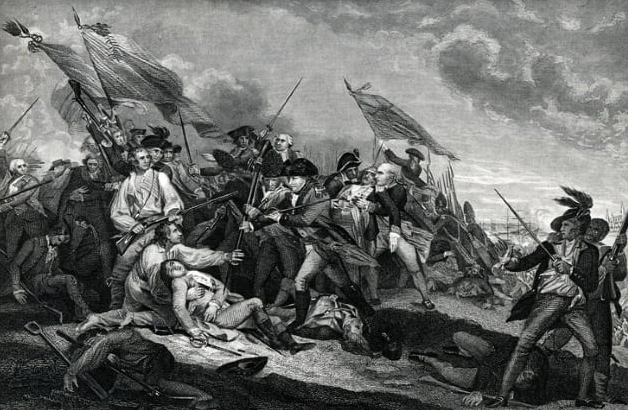
The taxes that sparked the American Revolution were, from Britain's perspective, a direct consequence of American actions. Britain believed the colonists provoked the costly French and Indian War by encroaching on French and Native American lands, ignoring British warnings. To repay the war debt, Britain imposed what colonists called "intolerable" taxes, viewing American protests as a refusal to take responsibility.
British authorities saw the colonial complaints as unreasonable. Demands for representation seemed like a request for special privilege, as some English cities also lacked it. Furthermore, the desire to expand westward appeared to repeat the very mistakes that caused the war. Britain felt it was not suppressing liberty, but guiding a reckless colony from self-destruction.
9. The War Of 1812 Was The US Siding With Napoleon
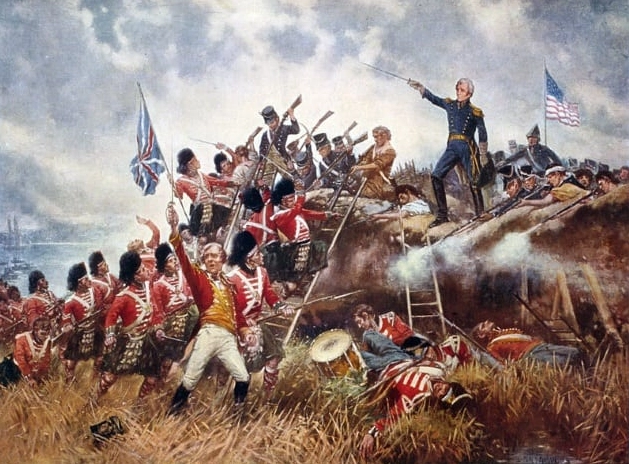
The United States officially declared war on Britain in 1812 over impressment—the British practice of kidnapping American sailors into the Royal Navy. However, from the British perspective, the conflict began earlier, rooted in the Napoleonic Wars. The 1803 Louisiana Purchase, which funded Napoleon's European campaigns, and subsequent U.S. trade with France were seen as aiding Britain's enemy, leading Britain to intercept American ships.
Britain viewed the War of 1812 as a minor sideshow to its war against Napoleon, dedicating only 7% of its military budget to it. British forces focused primarily on defending Canadian territory from U.S. invasion, while considering American sailors seized as deserters from their navy, not innocent citizens.
8. The Texas Revolution Was Land Theft By Illegal Immigrants And Slavers
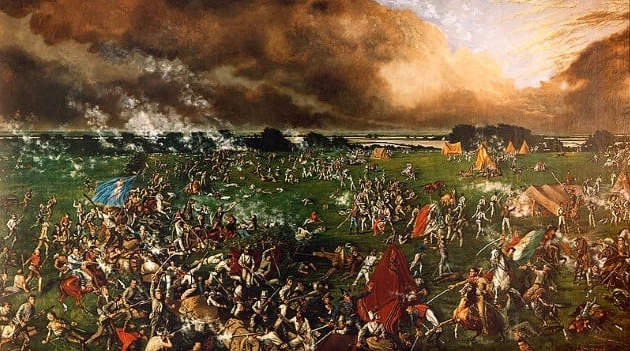
From the U.S. perspective, Texas’s fight for independence was a struggle for liberty against a corrupt Mexican government. Mexico, however, viewed it as a movement driven largely by American newcomers and slaveholders. Mexico had abolished slavery in 1829, but faced fierce resistance from Texas, forcing it to grant exemptions to avoid revolt. Subsequent attempts to enforce anti-slavery laws were met with outrage, and Texans even cited Mexico’s efforts to limit slavery as a grievance for rebellion.
Supporting Mexico’s view, many key revolutionaries were recent American arrivals—including the author of the Texas Declaration of Independence, who had lived there barely a year. An estimated 20,000 Americans had also crossed into Texas illegally. Once independent, Texas promptly reinstitued slavery, underscoring the centrality of the institution to the conflict.
7. The Mexican-American War Was An Unjustifiable Invasion
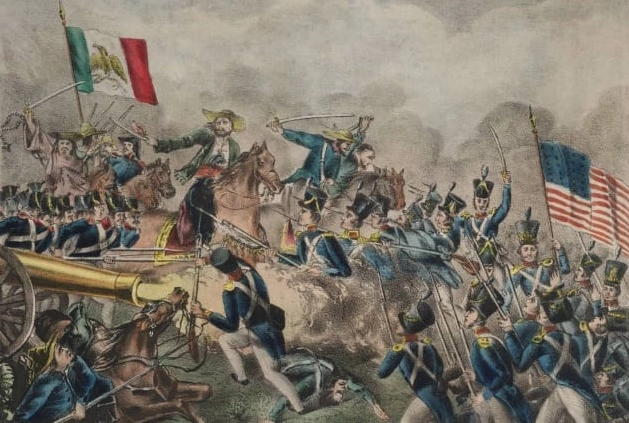
From Mexico's perspective, the U.S. was unquestionably the aggressor in what they call the "U.S. Invasion." President James K. Polk claimed the war was defensive after Mexico attacked a fort on the Rio Grande. However, it is widely accepted that Polk deliberately built that fort on disputed land to provoke an attack and create a pretext for invasion.
Polk had long sought war, and this skirmish was his excuse. He swiftly invaded, seizing territory all the way to California. Many contemporaneous critics, including U.S. diplomat Nicholas Trist who negotiated the punitive treaty, were intensely ashamed of this unjust war, which one Mexican newspaper likened to a bandit robbing a traveler.
6. The Union Wasn’t Really Fighting The Civil War To Abolish Slavery
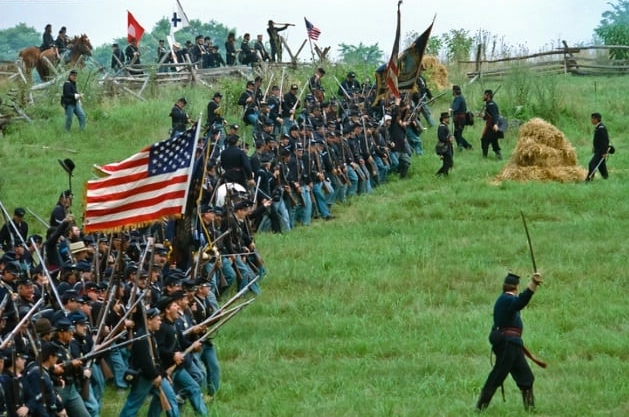
Many argue the Confederacy fought the Civil War to preserve slavery, yet the Union's primary aim was not to abolish it. Abraham Lincoln consistently stated his goal was to restore the Union, not to end slavery. He expressed frustration that slavery became part of the conflict, emphasizing the war was for national unity.
Some Confederates viewed abolitionist rhetoric as hypocritical. As the war progressed, certain Southern voices even suggested abandoning slavery if it hindered achieving independence. One Confederate publication declared that while slavery was a founding principle, securing separate nationhood took precedence.
5. The Emancipation Proclamation Was Meant To Militarize Slaves
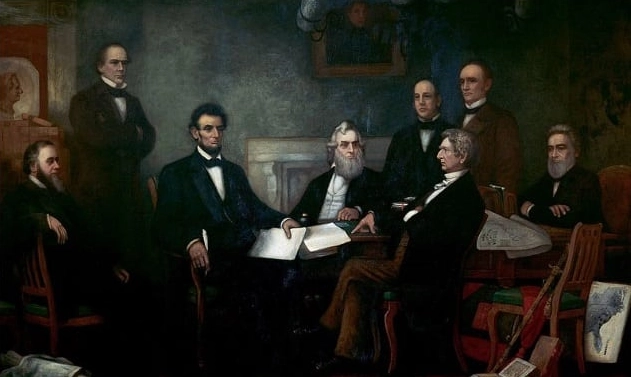
The Emancipation Proclamation is generally viewed as the great act of a heroic leader. It’s treated as the moment that slavery in the US came to an end, the moment when Lincoln proved the Confederates wrong and showed that he really was fighting for freedom and equality. The Confederates, though, didn’t buy it. To them, the Emancipation Proclamation seemed more like a trick than a declaration of freedom. Lincoln’s proclamation didn’t actually free slaves across America—in fact, it didn’t free anyone at all. It only affected slaves in states that were in open rebellion.
The slaveowning states that were fighting on Lincoln’s side were exempt from the rule. Lincoln was issuing an order that only affected people who didn’t take orders from him in the first place. Jefferson Davis was convinced that the whole thing was a dirty trick, meant to encourage Confederate slaves to riot. He pointed to a part of Lincoln’s order that told slaves “to abstain from violence unless in necessary self-defense.” This, he said, was a subtle call to African slaves to start killing their Confederate slaveowners. As far as he was concerned, the Emancipation Proclamation wasn’t a declaration of freedom. It was a call for blood.
4. The Gunfight At The O.K. Corral Was A Police Massacre
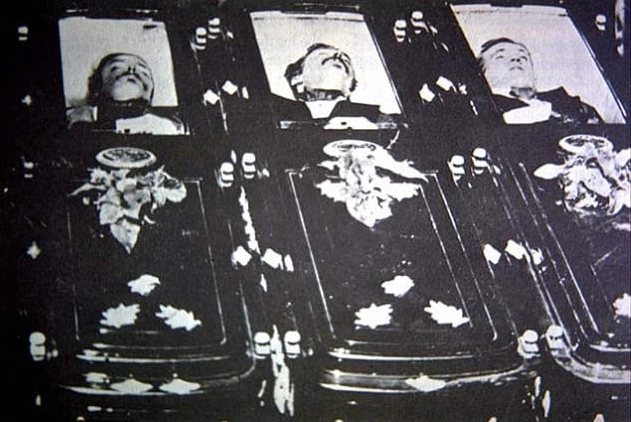
The Wild West symbolizes the clash between good and evil, epitomized by Wyatt Earp’s fight for order at the O.K. Corral. Earp claimed the shoot-out began when armed outlaws defied his order to disarm, forcing a lawful response.
However, witness Billy Allen presented a contrasting account: he stated the Earps provoked the conflict by drawing their guns and threatening the group, who responded with open hands and claims of being unarmed. If true, this would transform the event from a gunfight into a massacre, though the court ultimately ruled in the Earps’ favor.
3. The Philippine-American War Started Because Of Blatant Racism
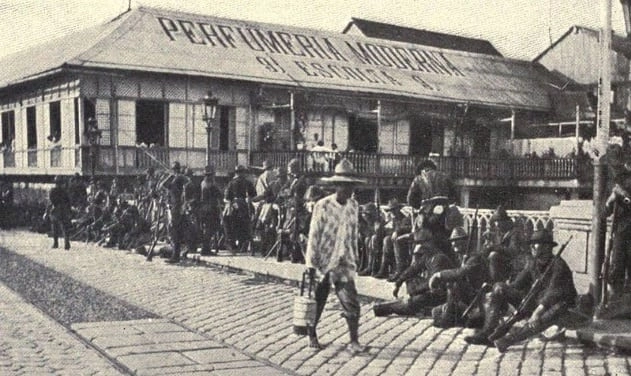
Following the Spanish-American War in 1898, the United States gained control of the Philippines. Initially uncertain about its role, the U.S. resolved to maintain authority when an open rebellion erupted. American officials claimed they were misunderstood—unlike other colonizers, they aimed to prepare the Philippines for independence but were denied the chance to demonstrate their goodwill.
Filipinos, however, rebelled for clear reasons: the arrival of American troops revealed intense racism and brutality. Civilians reported being called racial slurs, robbed, raped, and beaten. This treatment, not impatience, fueled their rebellion. Evidence supports this, including Theodore Roosevelt’s description of the islands as a "black chaos of savagery" and a soldier’s admission that treating Filipinos "as people" could have prevented the war.
2. The Vietnam War Was Part Of The Vietnamese Battle For Independence
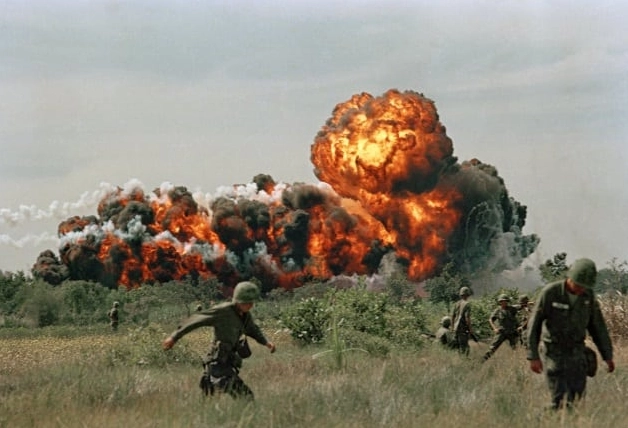
In Vietnam, the conflict is known as the “Resistance War against the American Empire to Save the Nation,” where they believe the righteous prevailed. They view it simply as defending their homeland from invasion—a continuation of the independence struggle begun against France. When the U.S. began attacking, many saw it as an unprovoked assault on a nation seeking reunification.
Many Vietnamese were confused by the American intervention. One resident recalled seeing planes drop metal objects, only realizing it was a bombing when they struck his city. To ordinary people, the war was an unexplained attack; they did not grasp Communism’s role. As one stated, “People didn’t even know what Communism was.”
1. The Gulf War Was A Planned Conspiracy That Ruined Iraq
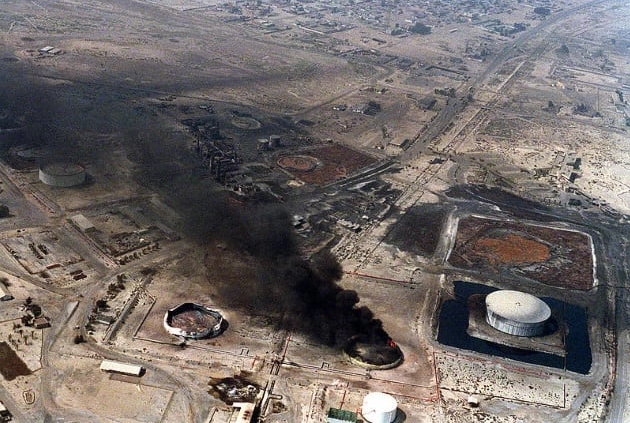
Saddam Hussein claimed the Gulf War was a conspiracy to cripple Iraq's economy. He believed he had defended the Arab world against Iran and that Kuwait's financial demands, coupled with manipulating oil prices, were part of a U.S.-backed plot to destroy Iraq. Insisting he had no choice, Hussein ordered the invasion of Kuwait, directing his forces to use nonlethal methods when possible.
Whether this narrative is true remains debatable. Regardless of whether the conflict was an American conspiracy or a response to Hussein's aggression, the outcome was the economic devastation of Iraq. As one correspondent noted, Iraq, once a developed nation comparable to Greece, was forced backward on the developmental ladder by the international community.